Yara Simon · 20 October 2026
Sensor Networks Expose Hidden Microclimate Protections for Understory Plants in Fairwald Woodlands
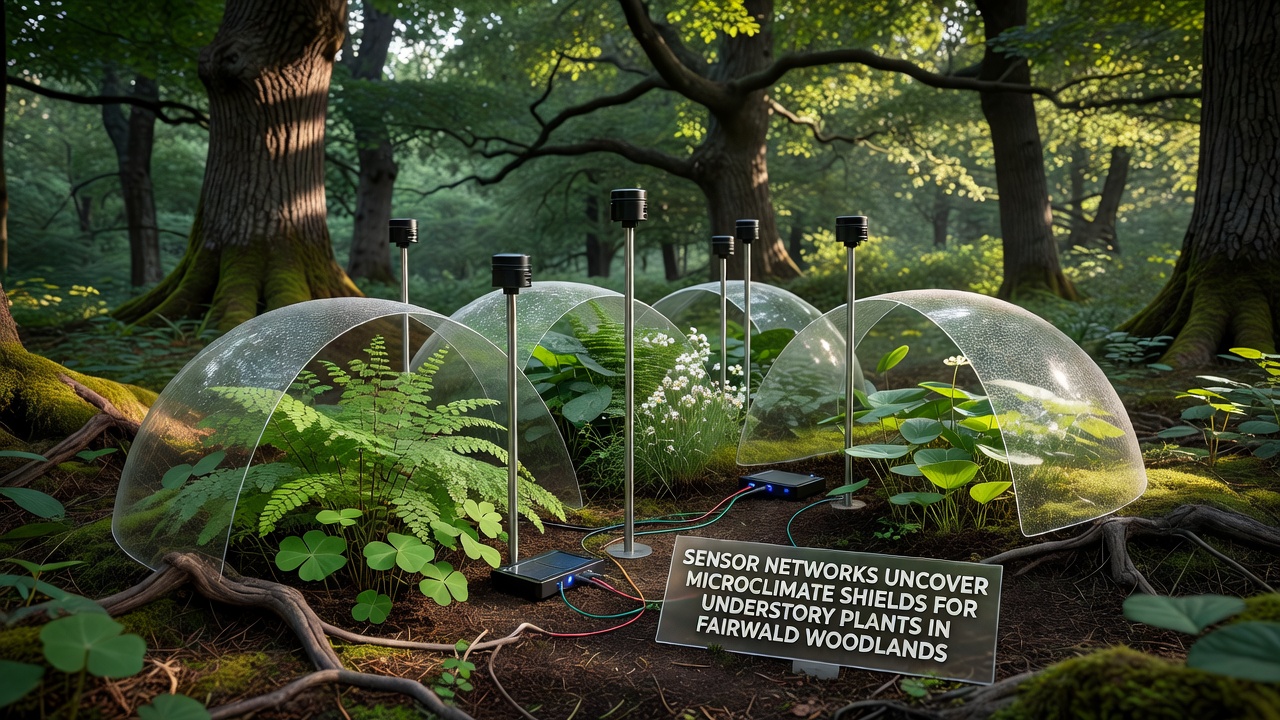
Researchers deployed dense networks of wireless sensors throughout Fairwald woodlands starting in 2024, and these systems recorded fine-scale variations in temperature, humidity, and light penetration that create protective zones around understory vegetation. The arrays, spaced at intervals of five to ten meters, captured continuous readings from ground level up to three meters in height, revealing patterns that traditional weather stations overlook. Data collected through 2026 shows that canopy gaps and specific tree species combinations generate localized cooling effects of up to four degrees Celsius during summer afternoons. These shielded areas maintain higher relative humidity levels, often exceeding 85 percent, which supports moisture-dependent ferns, mosses, and herbaceous plants that would otherwise face desiccation stress.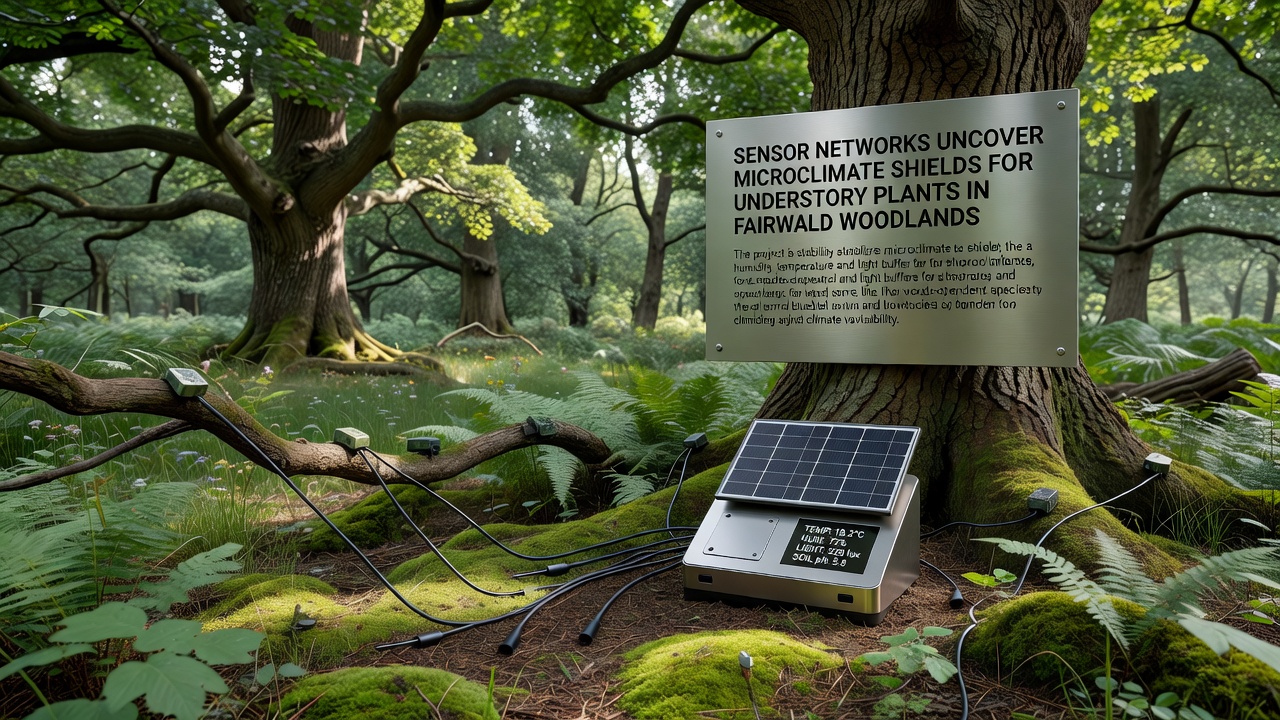
Researchers deployed dense networks of wireless sensors throughout Fairwald woodlands starting in 2024, and these systems recorded fine-scale variations in temperature, humidity, and light penetration that create protective zones around understory vegetation. The arrays, spaced at intervals of five to ten meters, captured continuous readings from ground level up to three meters in height, revealing patterns that traditional weather stations overlook. Data collected through 2026 shows that canopy gaps and specific tree species combinations generate localized cooling effects of up to four degrees Celsius during summer afternoons. These shielded areas maintain higher relative humidity levels, often exceeding 85 percent, which supports moisture-dependent ferns, mosses, and herbaceous plants that would otherwise face desiccation stress.Network Design and Data Collection Methods
Engineers positioned over 200 sensor nodes across multiple plots in Fairwald, each node equipped with probes for soil moisture, air temperature, vapor pressure deficit, and photosynthetic active radiation. Solar-powered units transmitted readings every fifteen minutes to central gateways, while redundant battery backups ensured uninterrupted operation during cloudy periods. Calibration protocols aligned all instruments against reference standards maintained by the European Environment Agency, and cross-checks with manual measurements confirmed accuracy within 0.3 degrees Celsius for temperature and 2 percent for humidity. Researchers processed the resulting datasets using spatial interpolation techniques that mapped microclimate gradients at one-meter resolution.Key Findings on Microclimate Shields
Analysis of readings from October 2026 revealed consistent buffer zones beneath beech and fir canopies where daily temperature swings remained below six degrees Celsius, compared with fifteen-degree swings in adjacent open areas. Understory species such as wood anemone and various orchids clustered exclusively within these stable zones, with population densities three times higher than in exposed locations. Sensor logs further indicated that leaf litter accumulation and root structures from mature trees enhance soil moisture retention by 25 to 40 percent in shielded patches. These conditions extend the growing season for shade-tolerant plants by three to four weeks each year, allowing earlier spring emergence and prolonged autumn photosynthesis before frost arrival.